BASautomation Building on BACnet®

BACnet Building Automation and Control Network, developed by the American Society of Heating, Refrigeration, and Air-Conditioning Engineers (ASHRAE), is the most popular open protocol found in building automation and energy management systems. The intent of this open standard is to allow building owners and systems integrators the opportunity to pick and choose BACnet-compliant equipment from various vendors. Contemporary Controls endorses the "open control" concept and its BASautomation line of BACnet products offers open solutions when implementing networked controls in buildings.
BACnet client devices initiate commands while BACnet server devices respond to commands. BACnet devices communicate to one another over a network. The more popular networks include the Internet Protocol (BACnet/IP) and the Master-Slave Token-Passing network (BACnet MS/TP). Interconnecting BACnet networks requires BACnet routers while connecting non-compliant BACnet devices, such as Modbus to a BACnet network requires a gateway. Supervisors typically reside at the IP level functioning as clients while I/O modules and communicating thermostats reside at the MS/TP level functioning as servers. Controllers can be found at either level functioning as servers or in some cases as client/servers.
Whatever the product need, the BASautomation line has a solution.
Related Products
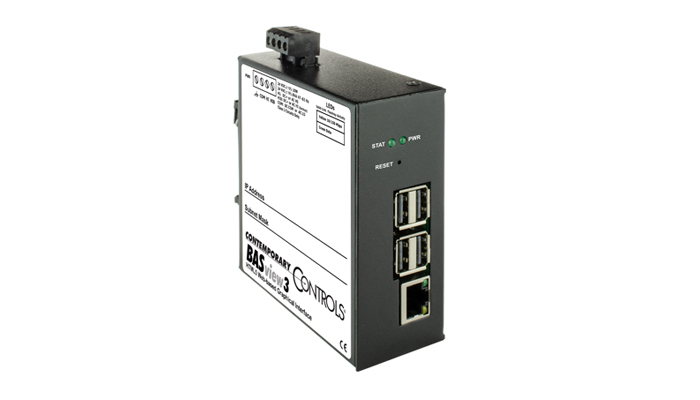
Supervisors
Supervisors provide both BACnet/IP client functionality and control in one package. Besides BACnet MS/TP and Modbus to BACnet integration, supervisors provide head-end capabilities such as alarming, trending, scheduling and graphics.
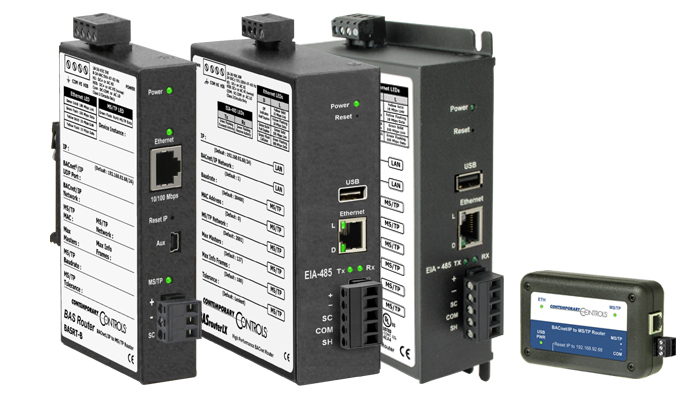
Routers
The BASrouters are multi-network routers used to route messages between BACnet/IP, BACnet Ethernet and BACnet MS/TP networks. Three versions are available—two DIN-rail mounted units for fixed installations and a portable unit for commissioning and troubleshooting.
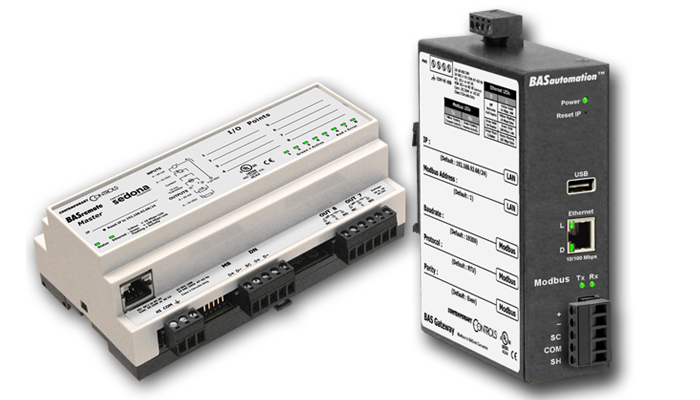
Gateways
To achieve BACnet compliance, BASgateways make Modbus devices appear as individual BACnet devices. Using the concept of virtual routing, each connected Modbus device is treated as a separate BACnet device with object points representing only those Modbus registers selected from the addressed device.
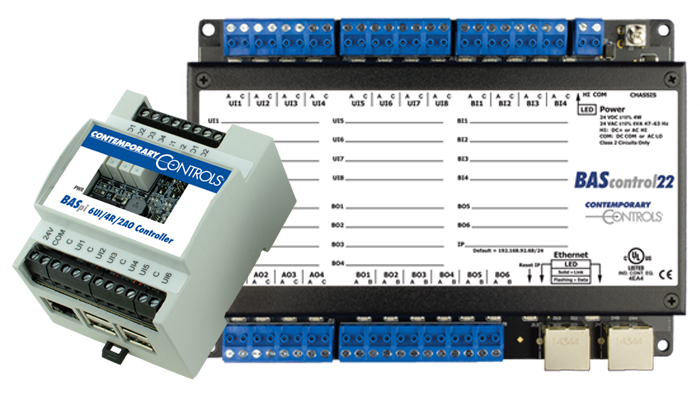
Controllers
The BASautomation open controllers feature BACnet as a communications protocol and Sedona as a license-free function block programming language. The two series of controllers address unitary control and Micro PC Edge control. Each series is freely programmable using the free BAScontrol Toolset over an Ethernet connection. Pre-built application programs for common HVAC applications are also available.
Communicating Thermostats
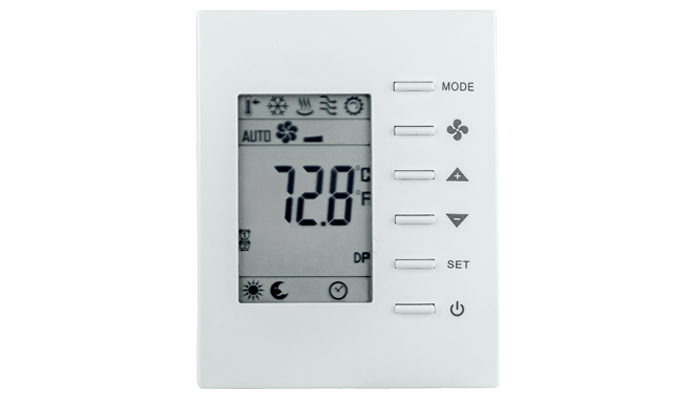
The BASstat line of BACnet Communicating Thermostats feature BACnet server functionality over MS/TP or Wi-Fi. Models exist for multi-staged heating/cooling of rooftop units (RTUs) and for 2-pipe or 4-pipe fan coils (FCUs). These devices can easily be supervised by BACnet clients.
I/O Modules
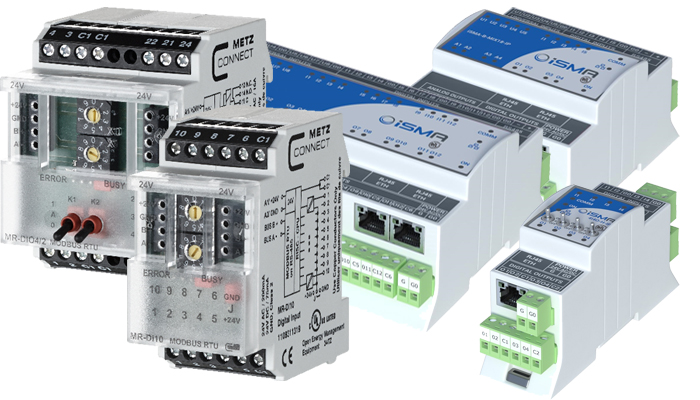
For those installations that support a fieldbus solution such as Modbus RTU or BACnet MS/TP, Contemporary Controls provides solutions for expanding the number of I/O points in the field. Cost-effective Cube I/O modules are available with analog and digital inputs and outputs in varying combinations.
Legacy Products
Can't find your product? Check out our Legacy Products for discontinued items. Technical support materials are still available and replacement information is provided.
Resources
BASautomation – Building on BACnet Catalog (English)
BASautomation – Building on BACnet Catalog (German)
BASautomation – Building on BACnet Catalog (Spanish)
Object Modeling a Physical BACnet Device
How BACnet is Changing Building Automation Networking
Introduction to BACnet® Routers
Introduction to BACnet for Building Owners and Engineers (Published by BACnet International)